Smile Strong
Your guide to zirconia bridges and dental health.
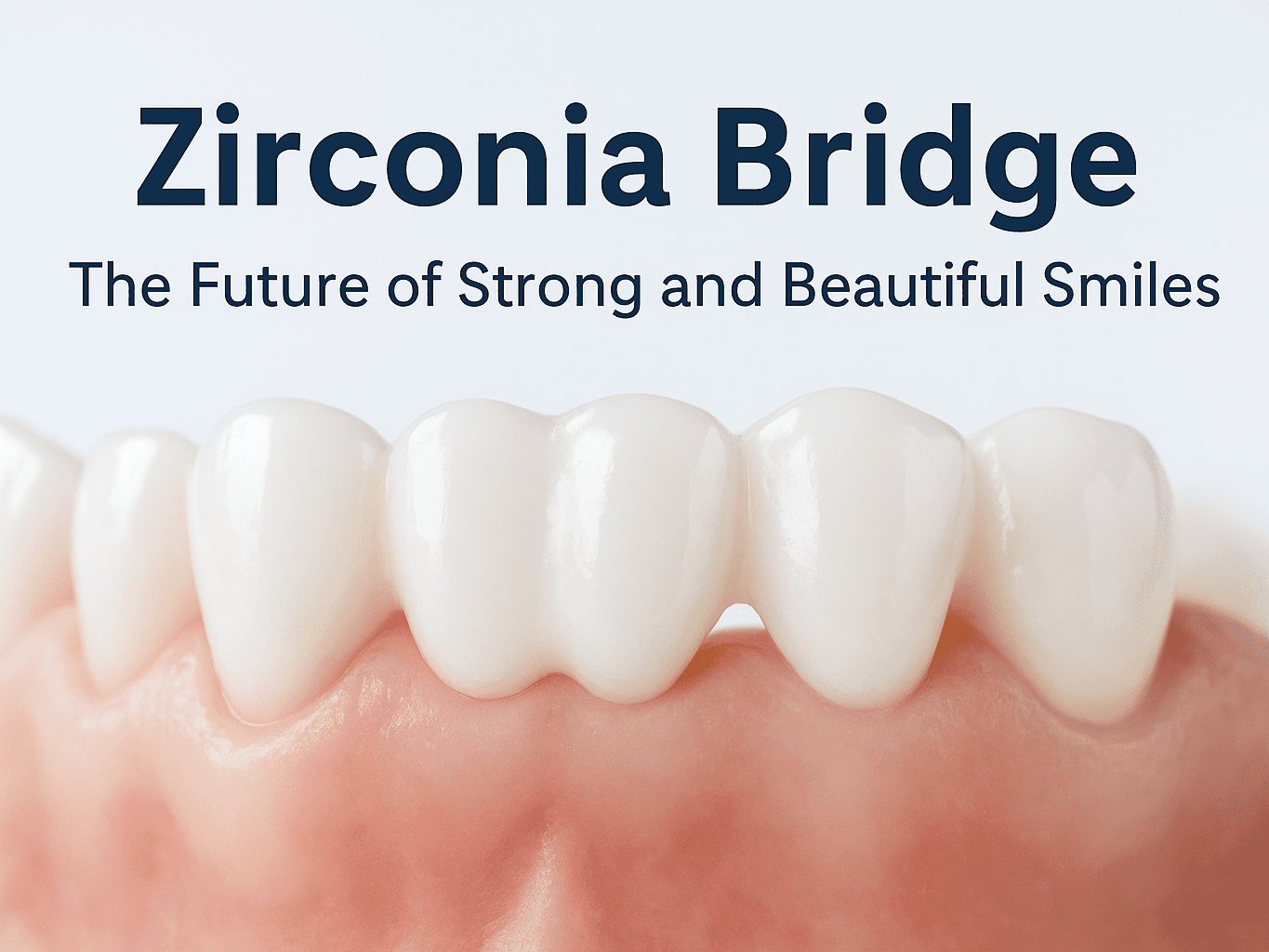
Zirconia Bridge: Cost, Benefits, Longevity & What to Really Expect
A complete 2026 guide to pricing, durability, and how zirconia compares to porcelain and acrylic — before you commit to treatment.
If you’re missing one or more teeth, chances are your dentist has mentioned a “zirconia bridge” as an option. It’s one of the most searched restorative dentistry topics right now, and for good reason: zirconia bridges combine near-natural aesthetics with a strength level that most other materials can’t match.
This guide breaks down everything you actually need to know before committing — what a zirconia bridge is, how much it costs in 2026, how long it lasts, how it compares to porcelain and acrylic, and what the procedure and recovery actually feel like.
What Is a Zirconia Bridge?
A zirconia bridge is a fixed dental restoration made from zirconium dioxide, a white, tooth-colored ceramic prized in dentistry for its combination of strength, biocompatibility, and light-reflecting properties similar to natural enamel.
Unlike a traditional porcelain-fused-to-metal (PFM) bridge, a zirconia bridge is typically milled from a single solid block of material — a “monolithic” restoration. That one-piece construction removes the weak point where porcelain meets a metal framework, which is one of the most common failure points in older bridge designs.
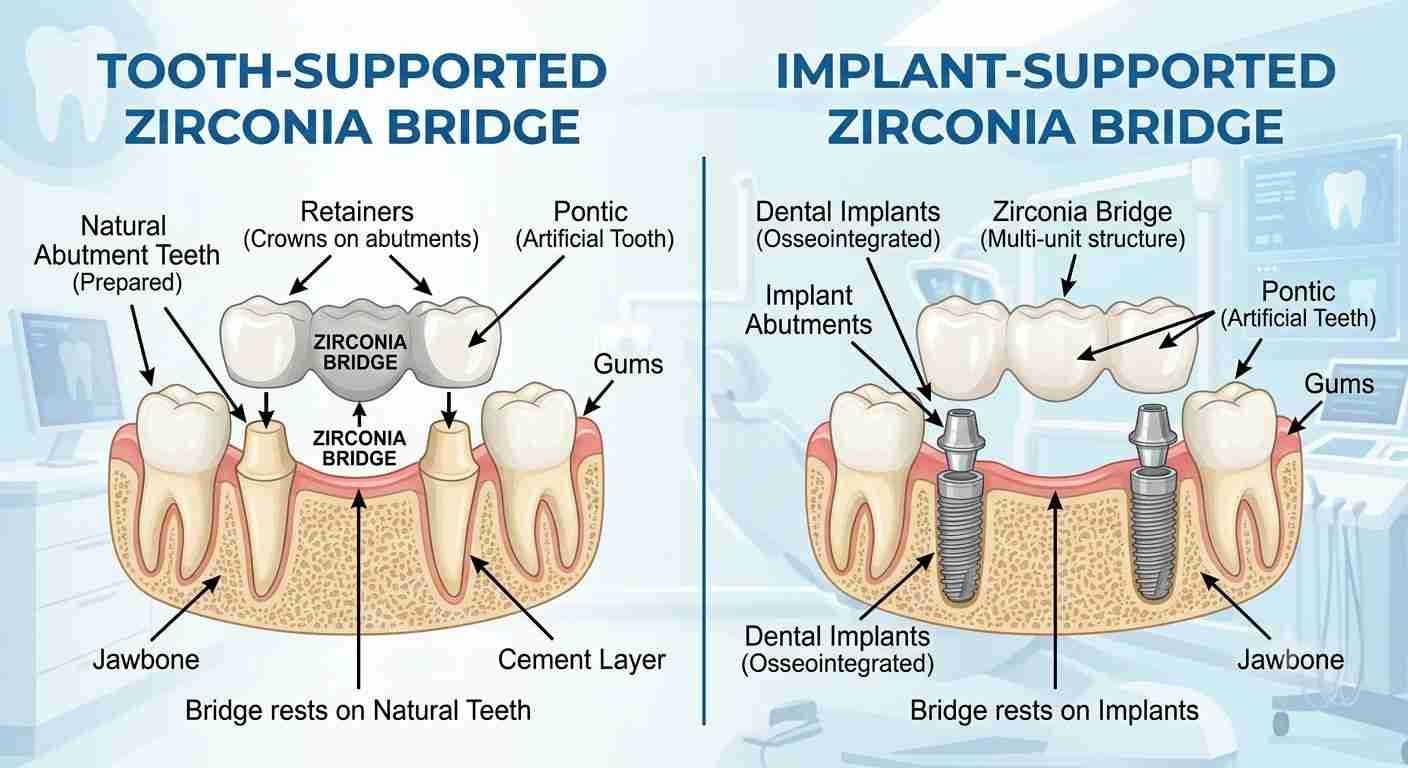
A bridge itself is simply a set of connected dental crowns that “bridges” a gap left by missing teeth. It’s made up of:
- Abutment teeth or implants — the anchors on either side of the gap
- Pontic(s) — the artificial tooth (or teeth) that fill the space
- Retainer crowns — the crowns that fit over the abutments and hold the pontic in place
Zirconia bridges can be used for a single missing tooth, several missing teeth in a row, or an entire arch.
How Zirconia Bridges Work: Tooth-Supported vs. Implant-Supported
There are two main ways a zirconia bridge is anchored in the mouth, and the difference matters a lot for both cost and candidacy.
Traditional (Tooth-Supported) Zirconia Bridge
This is the classic bridge setup. The dentist prepares the natural teeth on either side of the gap, files them down slightly, and cements zirconia crowns over them with a connected pontic in between. It’s a good option when you have healthy teeth flanking the gap and don’t want or need implant surgery.
Implant-Supported Zirconia Bridge (Full-Arch / All-on-4 and All-on-6)
For patients missing most or all of their teeth in an arch, the zirconia bridge is instead anchored to 4–6 dental implants placed in the jawbone, rather than natural teeth. This is often marketed under brand names like BruxZir, Prettau, or simply “zirconia full arch.” Because the entire prosthesis is screwed onto implant posts, it’s fixed in place permanently and can only be removed by a dentist for maintenance — unlike a removable denture.
Zirconia Bridge Cost in 2026
Cost is the single most-searched question around zirconia bridges, and the honest answer is: it depends heavily on how many teeth are involved and whether implants are part of the treatment.
Here’s a realistic breakdown based on current U.S. pricing trends:
| Treatment Type | Typical Cost Range (2026) |
|---|---|
| Single-tooth zirconia crown | $1,200–$2,500 |
| 3-unit zirconia bridge (tooth-supported) | $2,500–$6,000 |
| 6-unit zirconia bridge | $5,000–$16,000+ |
| Full-arch implant-supported zirconia bridge (one arch) | $15,000–$35,000 |
| Both arches, full zirconia restoration | $30,000–$80,000+ |
A few things drive that wide range:
- Number of implants needed. All-on-4 designs cost less than All-on-6 or higher implant counts.
- Lab quality and material grade. High-translucency, aesthetic-layered zirconia costs more than standard monolithic blocks.
- Case complexity. Patients with bone loss may need grafting first, which adds to the total.
- Geographic location. Pricing in major U.S. metro areas tends to run higher than the national average.
- Whether it’s tooth-supported or implant-supported. Implant-supported full-arch bridges are always the more expensive route because they include surgery, implant hardware, and the prosthesis itself.
How Long Does a Zirconia Bridge Last?
Zirconia bridges are widely regarded as one of the longest-lasting fixed restorations available. Most clinical sources put average longevity at 10–15 years, with many well-maintained bridges lasting 15 to 20+ years, and some patients reporting functional bridges beyond 25 years.
For comparison, a review of clinical studies found roughly a 90% 5-year survival rate for zirconia-based restorations, closely tracking metal-ceramic bridges — impressive given zirconia’s metal-free, more aesthetic profile.
Longevity depends on a few controllable factors:
- Oral hygiene — daily flossing under the pontic and around abutments or implants
- Bite forces — heavy grinding (bruxism) can shorten lifespan without a night guard
- Diet — very hard foods (ice, hard candy, unpopped popcorn) raise fracture risk
- Regular checkups — twice-yearly visits catch small issues before they become bridge failures
- Gum and bone health — the supporting teeth or implants still need to stay healthy; a bridge can outlast its foundation if that foundation isn’t cared for
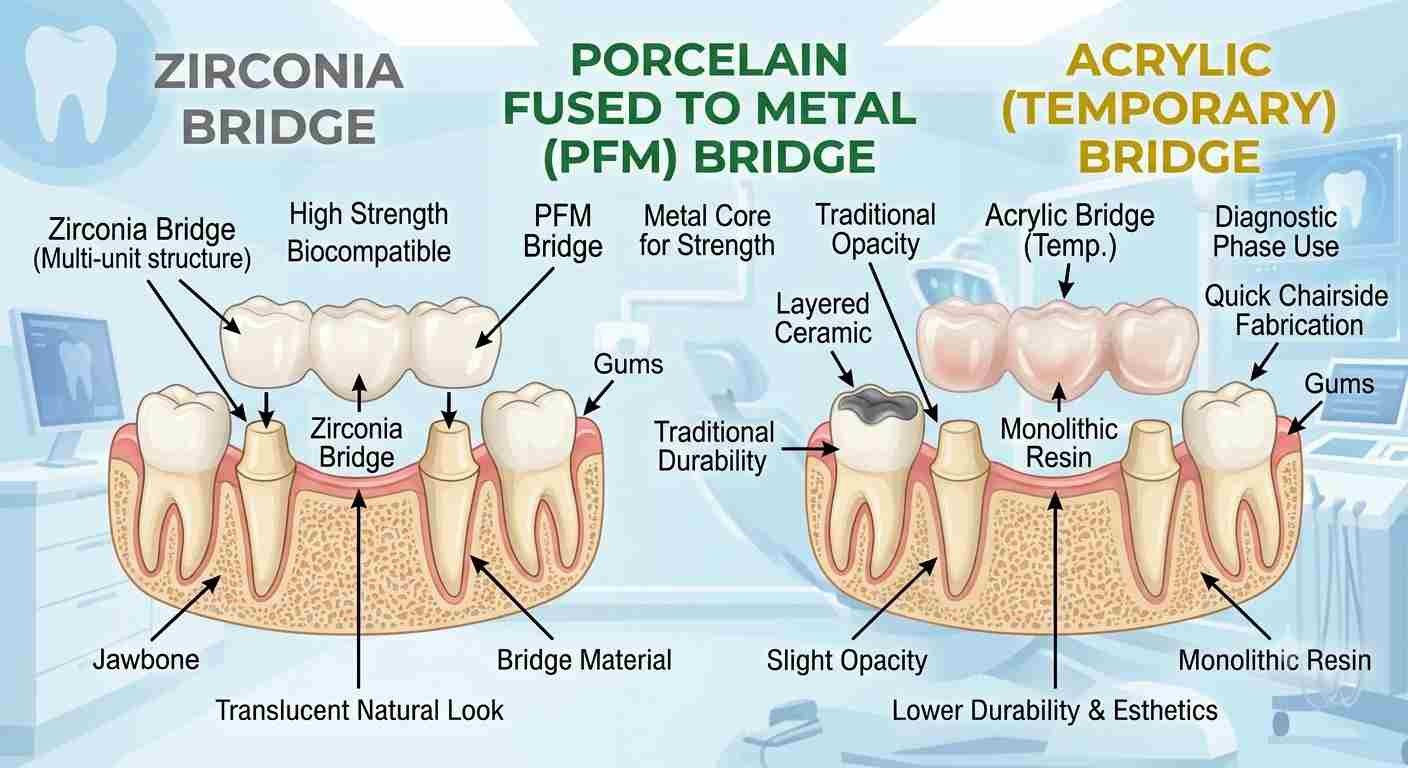
Zirconia vs. Porcelain vs. Hybrid Acrylic: Which Should You Choose?
This is the comparison most patients get stuck on, so here’s a straightforward side-by-side.
| Factor | Zirconia | Porcelain (PFM) | Hybrid Acrylic |
|---|---|---|---|
| Strength | Very high — resists chipping and fracture | Moderate — can chip at the porcelain-metal junction | Lower — prone to wear and staining over time |
| Appearance | Natural, though can be slightly more opaque | Excellent translucency, great for front teeth | Looks natural at first but fades/stains faster |
| Lifespan | 10–20+ years | 5–15 years | 5–10 years, often needs replacements sooner |
| Cost | Highest upfront | Mid-range | Lowest upfront |
| Repairability | Harder to repair (one solid piece) | Easier to repair individual sections | Easiest and cheapest to repair |
| Best for | Back teeth, full-arch implants, grinders (with night guard) | Front teeth where translucency matters most | Budget-conscious patients, interim solutions |
In short: zirconia wins on strength and long-term value, porcelain still holds an edge for front-tooth translucency in some cases, and hybrid acrylic remains the budget-friendly starting point — often used as a temporary bridge before a final zirconia restoration is placed.
Benefits of a Zirconia Bridge
- Exceptional durability. Milled from a single block, there’s no weak seam between materials.
- Natural appearance. Modern high-translucency zirconia mimics the way light passes through real enamel.
- Stain resistance. Unlike acrylic, zirconia doesn’t easily discolor from coffee, tea, or tobacco.
- Biocompatibility. Metal-free and hypoallergenic, making it a strong option for patients with metal sensitivities.
- Low plaque affinity. Its smooth, non-porous surface makes it harder for bacteria to accumulate compared to acrylic.
- Long-term value. A higher upfront cost is often offset by fewer replacements and repairs over the years.
Downsides of Zirconia Bridges
No material is perfect, and zirconia has real trade-offs worth knowing before you commit:
- Higher upfront cost compared to acrylic and even some porcelain options.
- Opacity in some cases. Certain zirconia grades look slightly less lifelike than layered porcelain, though newer high-translucency formulas have narrowed this gap significantly.
- Harder to repair. Because it’s one solid piece, a chip sometimes means replacing the whole bridge rather than a small in-office fix.
- Very stiff material. Ironically, its rigidity can occasionally lead to a full fracture under extreme bite force, rather than a small chip.
- Requires healthy support. Whether tooth- or implant-supported, the bridge is only as durable as the structures holding it up.
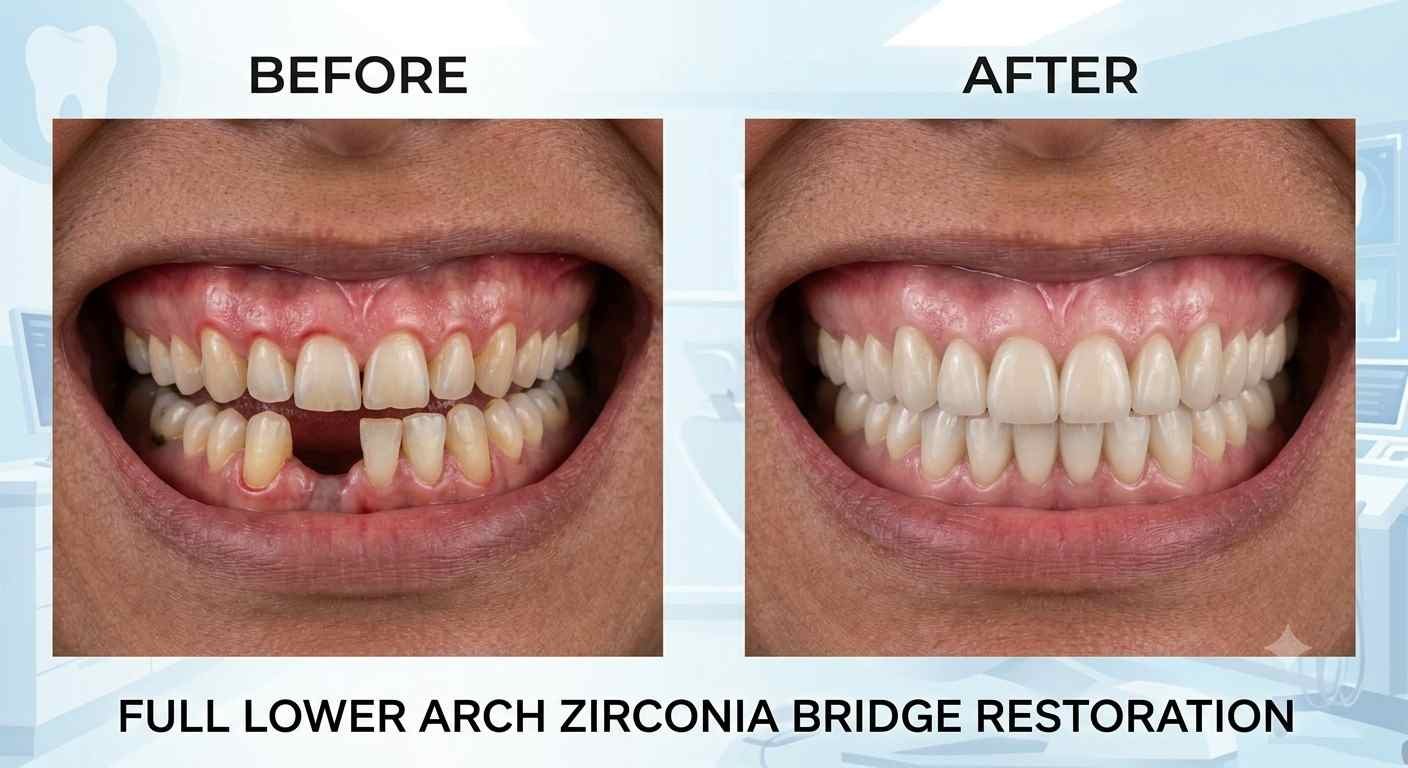
What to Expect During the Zirconia Bridge Procedure
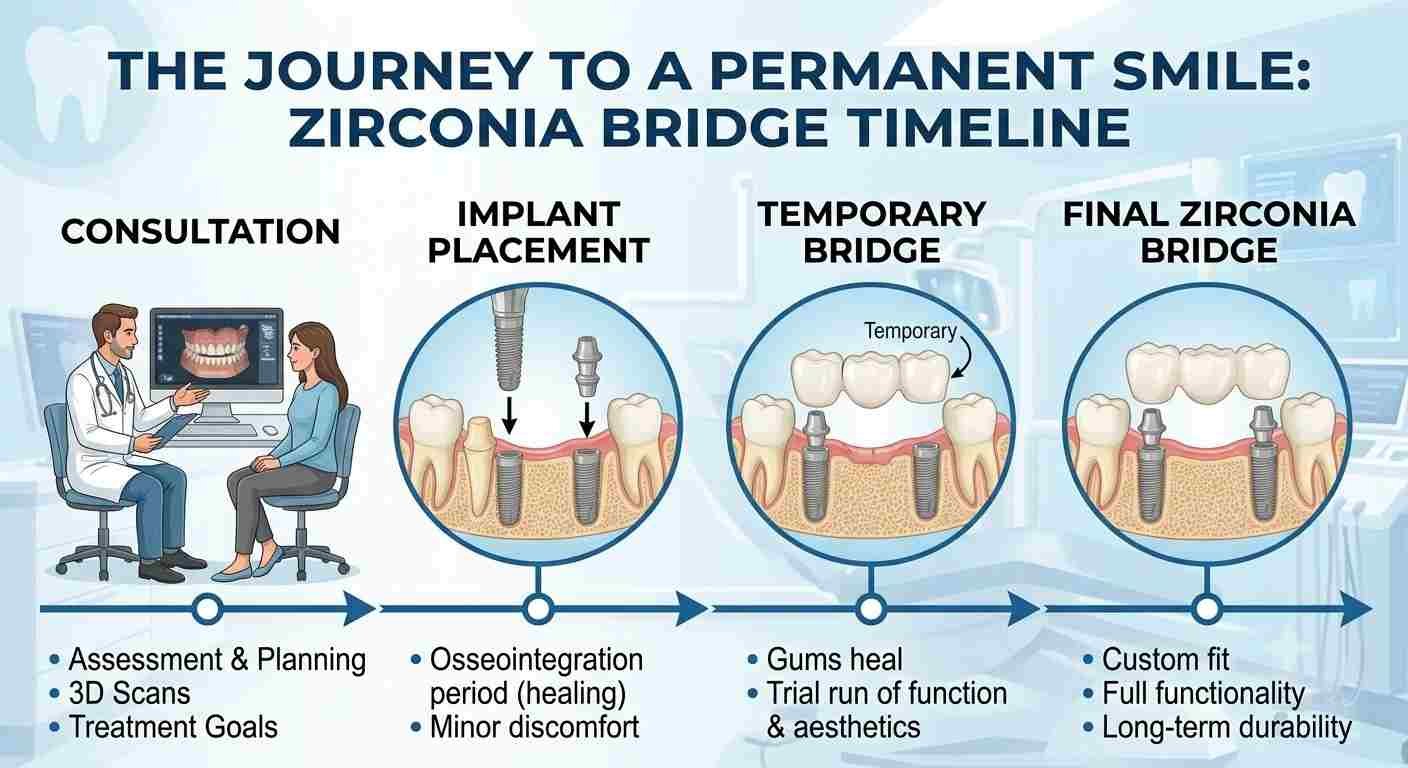
A typical zirconia bridge treatment plays out over a few key visits:
- Consultation and imaging. X-rays or a 3D scan assess bone quality, remaining teeth, and overall oral health.
- Tooth preparation or implant placement. For tooth-supported bridges, abutment teeth are gently filed down. For implant-supported bridges, implants are surgically placed and given time to fuse with the jawbone (osseointegration), which can take a few months.
- Digital scanning and design. Modern practices use intraoral scanners rather than messy impressions, sending precise digital files to the lab for milling.
- Temporary bridge. You’ll typically wear a temporary restoration while the final zirconia bridge is milled and finished.
- Fitting and adjustment. Your dentist checks fit, bite alignment, and color match before final cementation or screwing the prosthesis into place.
- Follow-up visits. A short adjustment period is normal — most patients adapt to speaking and chewing normally within days to a couple of weeks.
Caring for Your Zirconia Bridge
A little routine maintenance goes a long way toward hitting that 15–20+ year lifespan:
- Brush twice daily with a soft-bristled brush and non-abrasive toothpaste
- Floss daily using a floss threader or water flosser to clean underneath the pontic
- Use interdental brushes for hard-to-reach spots around abutments or implants
- Avoid biting into extremely hard foods (ice, hard candy, bones)
- Wear a night guard if you grind or clench your teeth
- Keep up with six-month professional cleanings and checkups
Who Is a Good Candidate for a Zirconia Bridge?
Zirconia bridges work well for most patients missing one or more teeth, but your dentist will typically evaluate:
- Bone density and gum health — especially important for implant-supported bridges
- Bite force and grinding habits — heavy grinders may need a night guard alongside the bridge
- Number of missing teeth — from a single gap to a full arch
- Budget and long-term goals — since zirconia carries a higher upfront cost but a longer expected lifespan
Patients with uncontrolled gum disease, insufficient bone for implants (without grafting), or certain untreated oral health issues may need additional treatment before a bridge can be placed.
Where Interest in Zirconia Bridges Is Highest Across the US
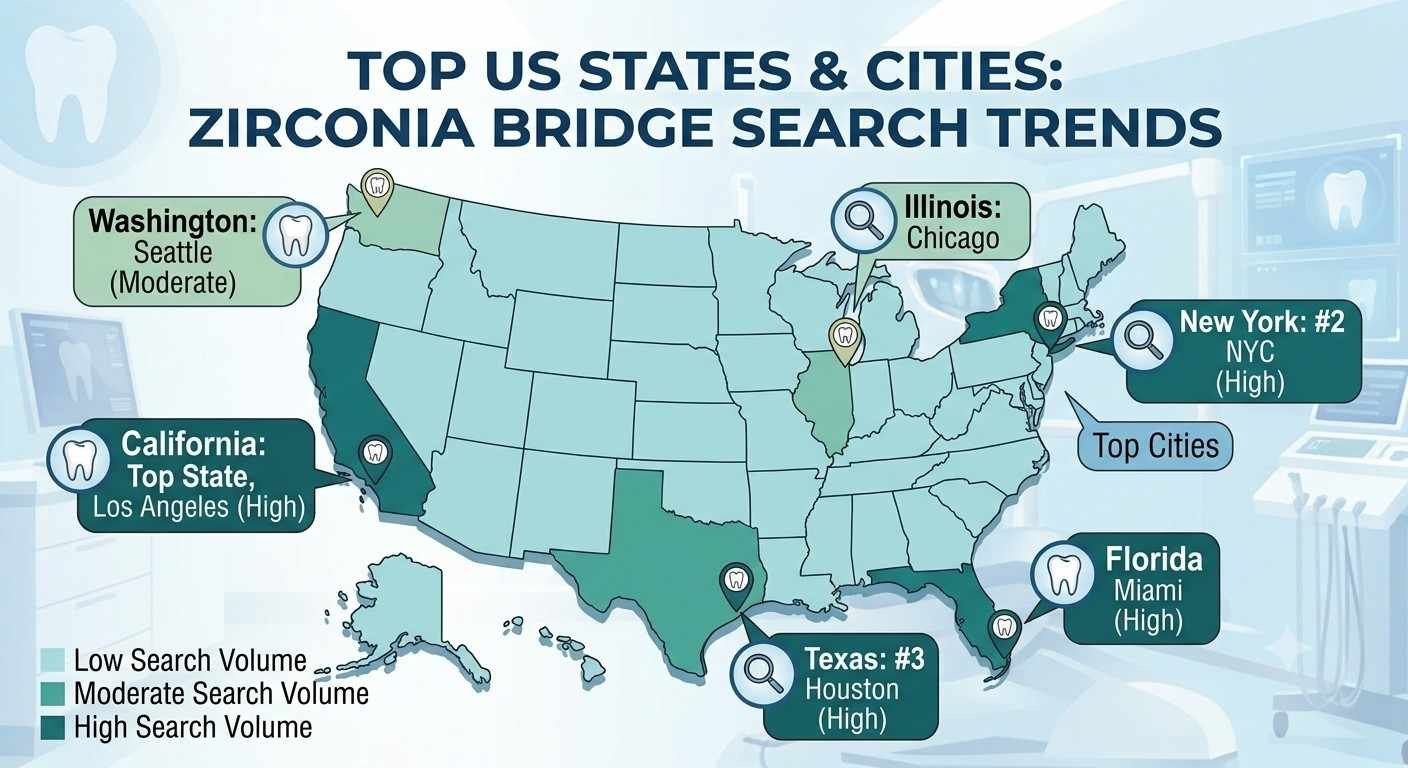
Search interest in zirconia bridges isn’t evenly spread across the country. Based on recent regional search trend data, states with the highest relative interest include:
At the city level, interest is concentrated most heavily around New York, NY, followed by Los Angeles, CA and Chicago, IL — likely reflecting both population density and the strong presence of cosmetic and implant dentistry practices in these metro areas. If you’re researching providers in one of these regions, expect a competitive market with a wide range of pricing and experience levels, which makes comparing quotes even more worthwhile.
Frequently Asked Questions
How long does a zirconia bridge last?
Most zirconia bridges last 10 to 15 years, and many patients get 15 to 20 years or more with consistent oral hygiene, regular dental visits, and avoidance of excessive bite force.
How much do zirconia bridges cost?
A tooth-supported zirconia bridge for a few teeth typically runs $2,500–$6,000, while a full-arch implant-supported zirconia bridge ranges from $15,000–$35,000 per arch, depending on the number of implants and lab quality.
What are the downsides of using a zirconia bridge?
The main drawbacks are a higher upfront cost, a more complex (and sometimes pricier) repair if it chips, and a slightly more opaque appearance in some cases compared to layered porcelain — though modern high-translucency zirconia has largely closed that gap.
Which is better, porcelain or zirconia?
Zirconia generally offers better strength and longevity, making it a strong choice for back teeth, grinders, and full-arch restorations. Porcelain can still have an aesthetic edge for front teeth in specific cases where maximum translucency is the priority. Many patients find the two comparable in modern high-quality labs.
Is a zirconia bridge better than a hybrid acrylic bridge?
For most patients, yes — zirconia is more durable, more stain-resistant, and longer-lasting than hybrid acrylic. Acrylic remains a reasonable choice for patients prioritizing lower upfront cost or needing a temporary restoration before a final zirconia bridge is placed.
Conclusion
A zirconia bridge is, for most patients, the strongest and most durable fixed tooth-replacement option on the market today — built to look natural, resist staining, and hold up for well over a decade with proper care. It costs more upfront than porcelain or acrylic alternatives, but that investment often pays off through fewer repairs, fewer replacements, and a more confident bite over the long run.
Whether you need a single tooth replaced or a full-arch implant-supported restoration, the right choice ultimately comes down to your budget, bone health, and long-term goals — which is exactly the conversation to have with a qualified prosthodontist or implant dentist before moving forward.
Zirconia Insights
-
Does Wisdom Teeth Removal Hurt? Real Pain Timeline
No list selected.Does Wisdom Teeth Removal Hurt? Real Pain Timeline Does Wisdom Teeth Removal Hurt? A Real Day-by-Day Pain Guide What the…
-
Cavities Between Teeth: Causes, Symptoms & Treatment
No list selected.Cavities Between Teeth: Causes, Symptoms & Treatment Cavities Between Teeth: Causes, Symptoms, and Treatment The tight space between two teeth…
zirconia Bridge Article &Dental care Guide

About Us
We share clear, expert advice on zirconia bridges to help you confidently restore your smile.
Zirconia Bridges


Real Voices
”Thanks to the zirconia bridge insights here, I finally understood my options and feel confident about my smile.”
Smile Confidently
Learn how zirconia bridges can restore your smile with strength and style.
Get in Touch
Hi!
Our Location
Based online, serving dental readers
Contact Us
697 Hilltop Street, Springfield, MA, USA
Visit Us
9am – 6pm